April 9, 2018
15 More Baking Terms Explained
Those pesky baking terms in recipes confusing you as you try to whip some fresh, delicious baked treats for your buds? We know the struggle to well and bring you 15 more baking jargon explanations, adding on to our initial list of ten.
-
- Baking Powder: Baking powder is used to leaven and lighten when baking. Always proof your baking powder before using it in a recipe by pouring 1/3 cup of hot tap water over 1/2 teaspoon of baking powder in a cup. The mixture should bubble enthusiastically. If it does not, toss it out.
- Baking Soda: Baking soda is different from baking powder. Baking soda reaction starts as soon as the ingredients are mixed together, so you want to get baked goods that call for baking soda into the oven as soon as possible before the reaction dies out.
- Batter: Best for deep frying or baking to a crisp, batter is the pourable liquid mix of flour, eggs, dairy or other ingredients.
- Blind Baking: Ideal for a no-cook filling or a filling that needs little cooking, blind baking is the process of partially or fully baking a pastry case in the oven without the filling. To ensure a crisp finish, line a tart tine with pastry, cover it with a greaseproof paper and weight down the pastry with ceramic baking beads, dried chickpeas, beans or lentils.
- Caramelize: Caramelisation is the process of heating a sugar substance until it begins to turn brown. It gives a sweet, burnt depth of flavour to the baked goods.
- Curdling: Curdling is when a food mixture separates into its component parts. A creamed cake mixture may curdle if the eggs are added too quickly or are too cold. It may be possible to save the mixture by adding a tablespoon of flour.
- Cutting In: This is the process of Incorporating butter (or another solid fat) into flour just until the fat is in small, granular pieces resembling coarse sand. This can be done by using two knives, forks or a special pastry cutter in a cross-cutting motion.
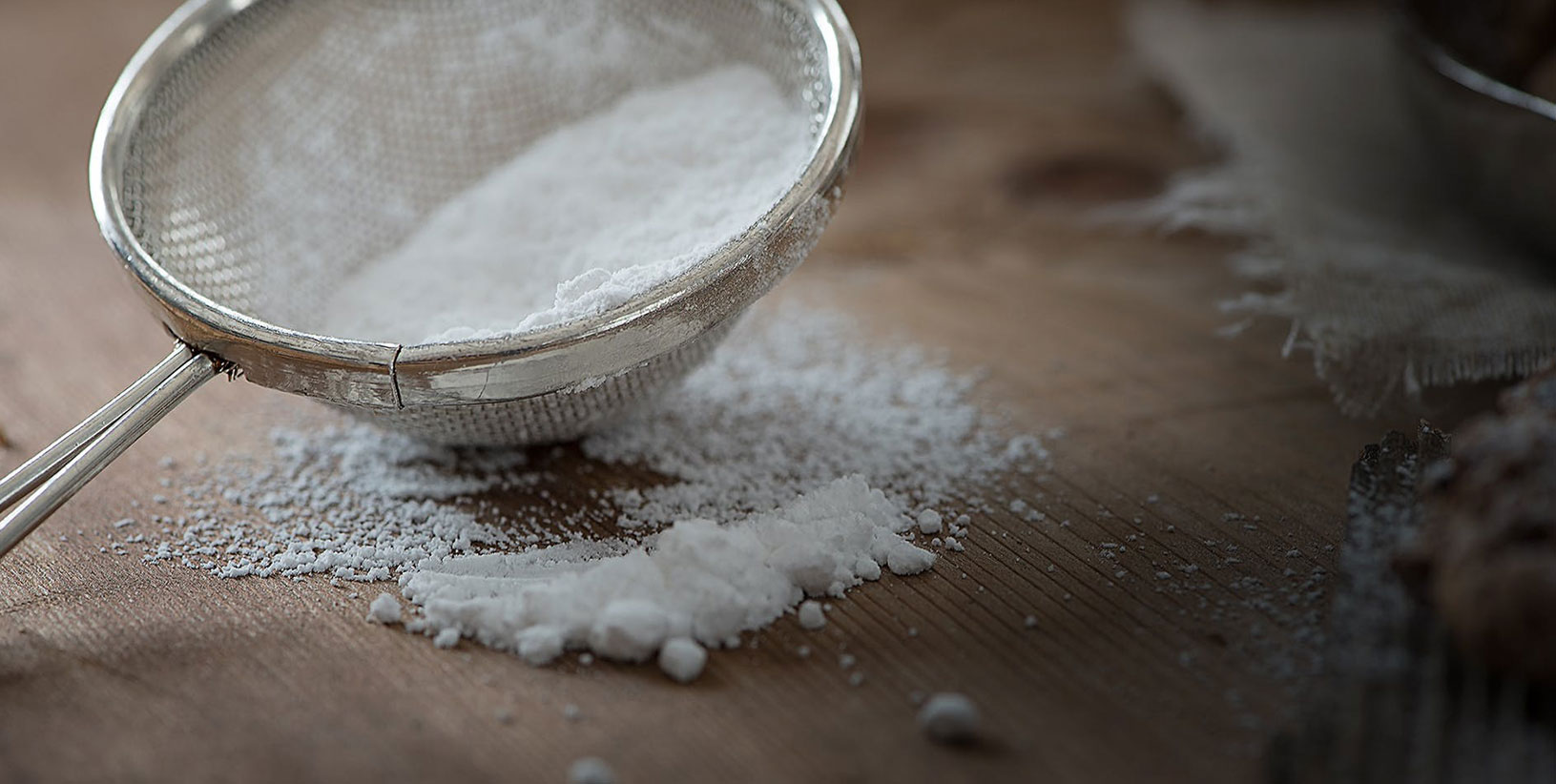
- Dusting / Dredging: This involves coating the surface of something with a light sprinkling of a dry substance e.g. flour, sugar, cocoa powder etc.) as a decoration using a tea strainer or fine sieve. You can also use a shaker or dredger which is a cup with a handle and perforated lid. Sometimes, a recipe may also ask you to ‘dust’ a work surface with flour or icing sugar to stop dough or fondant icing from sticking before kneading and rolling it out.
- Glaze: This is a form of baking technique where the baked good is coated with a thick, sugar-based sauce.
- Knead: This is a movement to combine dough by hand on a hard surface by folding the dough over, pressing down, turning it 90 degrees and then repeating the process. Kneading mixes the dough well and develops gluten strands that give strength and that chewy texture to breads and other baked goods.
- Lukewarm: This is a slightly warm temperature of around 40 degrees Celsius.
- Scald: This means to heat a liquid, usually milk, to just below the boiling point. Tiny bubbles will form around the edge at this stage.
- Score: This term means to cut lines or slits into the baked good before baking to allow it to expand in the right direction.
- Soft peaks: These are formed when egg whites or cream are whipped to the point at which a peak will bend or slump over to one side. To create a peak, pull the whisk or beater straight up and out of the foam.
- Stiff peaks: These are formed when egg whites or cream are whipped to the point at which a peak will stand completely erect. To create a peak, pull the whisk or beater straight up and out of the foam.

Now, you can understand the baking recipes, so go forth and bake away!